
Product Positioning
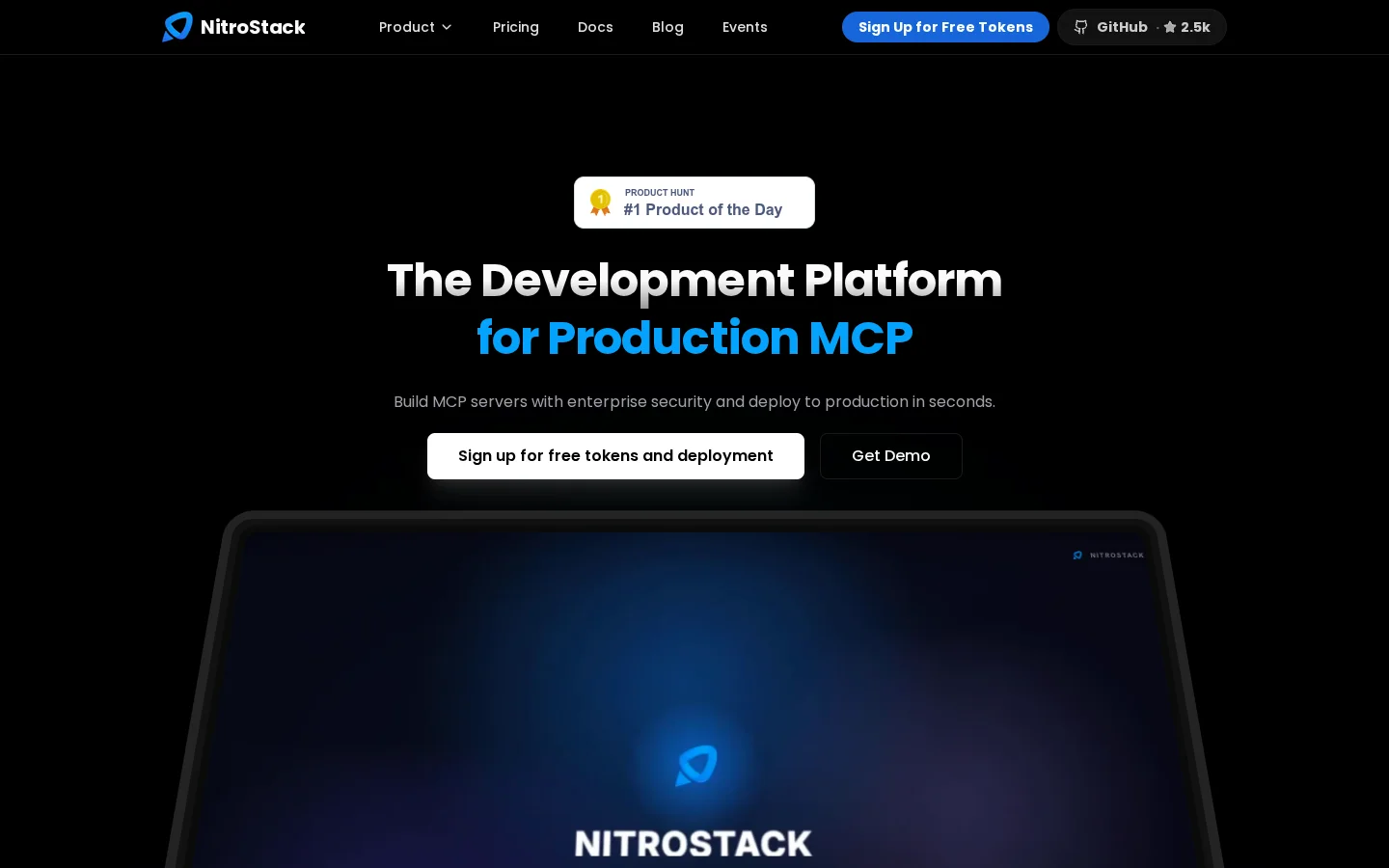
NitroStack is a production-ready full-stack platform for the Model Context Protocol (MCP). According to its official website, it consists of three parts—the SDK, NitroStudio, and NitroCloud—with the goal of letting developers build their own MCP tools rather than merely connecting existing ones.
Confirmed Key Features
- NitroStack SDK: A TypeScript-first development framework offering declarative decorators and Zod validation for defining MCP Tools, Resources, Prompts, and Tasks, with a built-in enterprise-grade authentication module. The official website states it is published on npm.
- NitroStudio: A desktop IDE for MCP development offering a visual inspector, visual tool testing, AI chat, Ops Canvas, voice mode, and API-to-MCP conversion capabilities.
- NitroCloud: A serverless MCP hosting service supporting deployment from GitHub, automatic scaling, custom domains, and automatic SSL, with the official website listing a cold start metric of under 2 seconds.
- NitroChat: A white-label AI chat client for MCP servers, supporting multiple AI providers and brand customization.
Use Cases
Suited for development teams that need to wrap internal APIs or business capabilities as MCP tools and deploy them to production; also suited for visual debugging and workflow troubleshooting of MCP tools during local development. The production use cases showcased on the official website cover areas such as operations troubleshooting, financial risk control, and business process conversations.
Pricing Information
The official pricing page shows that NitroCloud offers three tiers: Hobby is free with 30,000 requests per month; Pro is $30 per organization per month, including 300,000 requests per month, with overage at $0.10 per 1,000 requests; Enterprise starts at $250 per month. Model calls are billed separately per million tokens.
Additional Notes
The official website provides free tokens and a free deployment entry point, but the specific duration and terms of the free quota, as well as the SDK's separate licensing terms, should be based on the official documentation.