You launched the product. You cleaned up the landing page. Titles are tight, schema is in place, pages load fast, and the copy speaks to the buyer.
But search traffic barely moves.
That’s where many SaaS founders get stuck. They assume the problem is content, or technical SEO, or keyword choice. Sometimes it is. Often, though, the missing piece is simpler. Google doesn’t just look at what your site says about itself. It looks at who else on the web is willing to reference it.
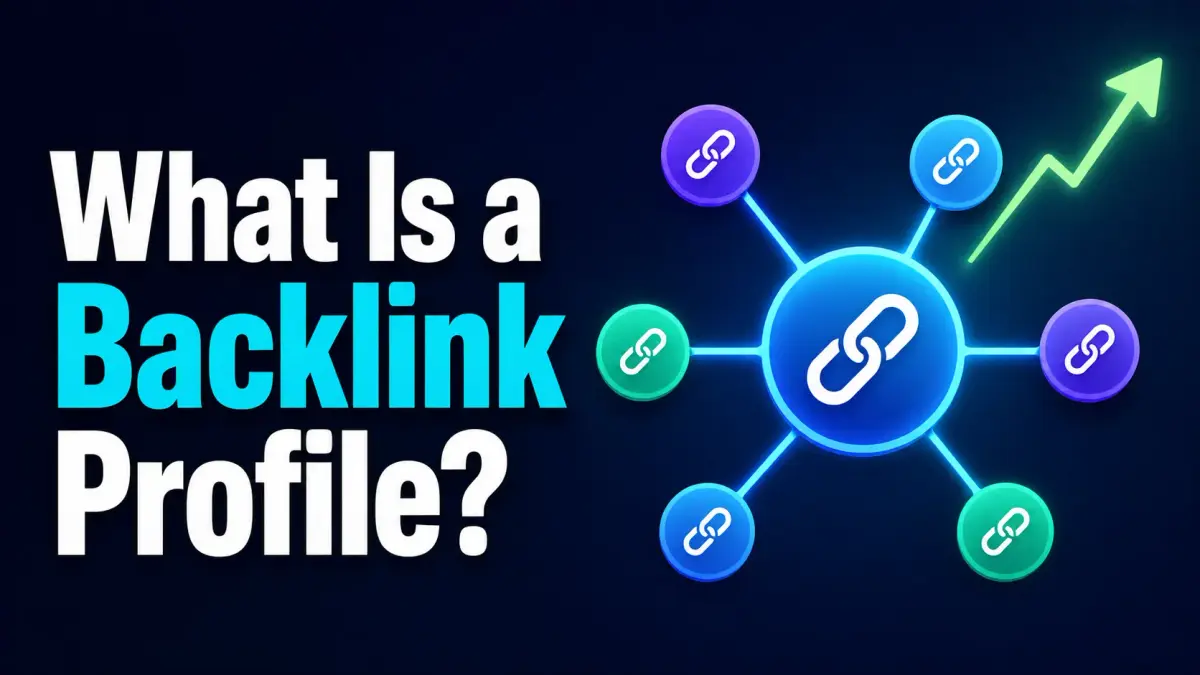
That network of references is your backlink profile.
If you’re asking what is a backlink profile, the practical answer is this: it’s the full pattern of websites linking to you, the quality of those sites, the words they use in the links, the pages they point to, and the way those links accumulate over time. For a SaaS company, that profile isn’t just an SEO metric. It’s part reputation signal, part discovery channel, and part launch infrastructure.
The Unseen Engine Behind Your SEO Success
A founder launches a product page for a new feature. The page is well written, the screenshots are sharp, and the keyword target is clear. A week later, nothing happens. The page is indexed, but it doesn’t climb. Demo requests don’t increase. Branded search stays flat.
That stall usually feels confusing because the visible work is already done. The page exists. The product is real. The offer is solid. What’s missing is the part buyers never see directly. Your backlink profile is the site’s external reputation layer.

It's a digital CV. Your homepage and product pages are what you say about yourself. Your backlink profile is what the rest of the industry is willing to say about you through links, citations, mentions, and references. Search engines read both.
A weak profile doesn’t always mean you have bad links. It often means you don’t yet have enough trustworthy, relevant ones. That’s common with early-stage SaaS because founders usually prioritise shipping, onboarding, and paid acquisition first. SEO gets attention later, and backlinks even later than that.
Why this matters right away
For a new or growing SaaS company, backlinks affect more than rankings. They influence how quickly new pages gain traction, whether category pages can compete, and whether launch assets get picked up beyond your own audience.
A backlink profile also shapes how durable your growth is. Paid campaigns stop when spend stops. A strong link profile can keep supporting feature pages, alternatives pages, comparison pages, and educational content long after publication.
Your backlink profile is not a side metric. It’s one of the clearest signals of whether the market treats your site as worth citing.
What a founder should understand first
You don’t need to become an off-page SEO specialist to use this well. You do need to understand a few fundamentals:
- A backlink profile is cumulative. One strong link helps. A structured pattern of good links helps far more.
- Quality and fit matter more than noise. A random pile of cheap links can create risk instead of authority.
- The profile can be managed. You can audit it, clean it up, and build it intentionally around launches, content, and commercial pages.
That shift matters. Once you stop treating backlinks as passive luck and start treating them as a managed business asset, your SEO strategy becomes much more predictable.